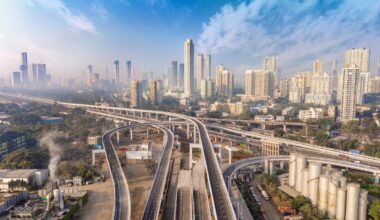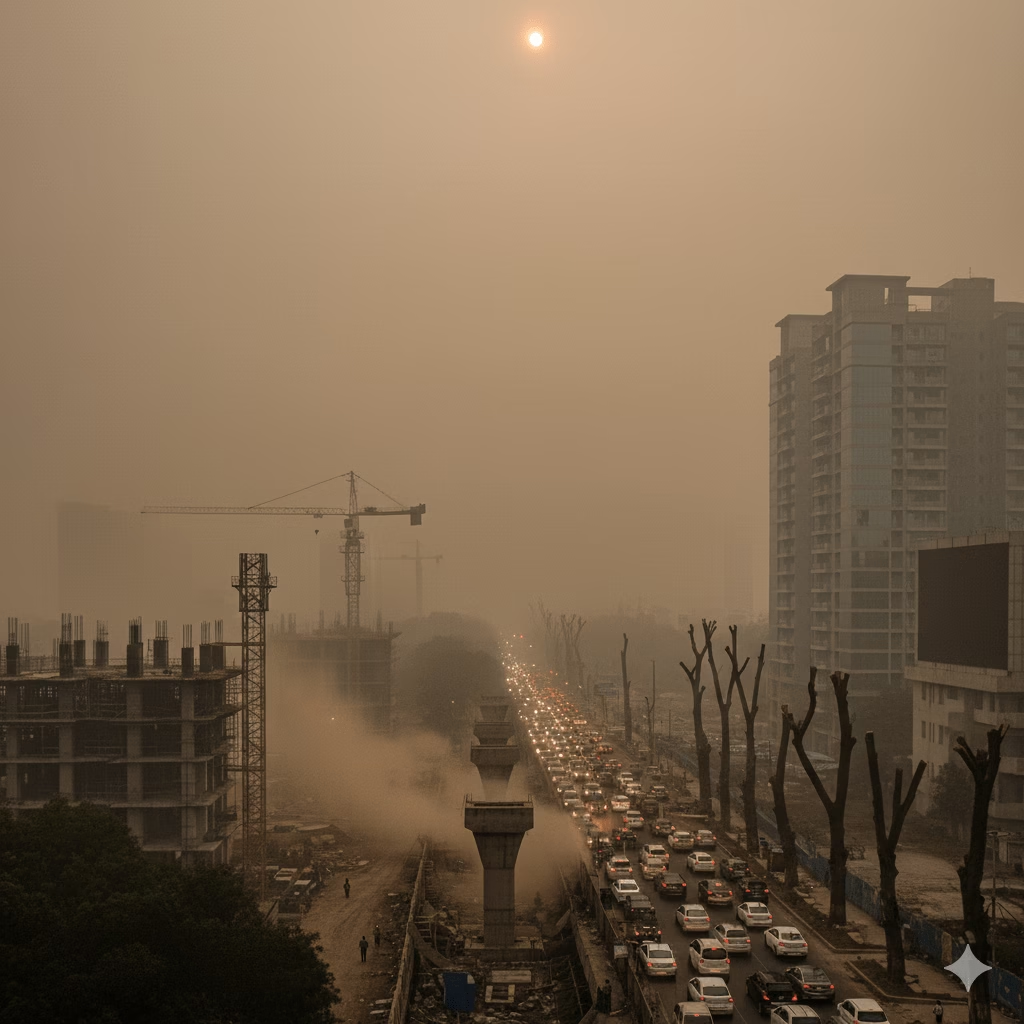
Thane, often lauded for its rapid development, is facing a dangerous environmental trade-off: severe air pollution. The Thane AQI (Air Quality Index) frequently registers in the ‘Poor’ or ‘Very Poor’ categories, alarming residents and local authorities alike. The drop in air quality is not accidental—it’s the direct result of unchecked, massive-scale development across the city.
1. 🏗️ The Dust Menace: Uncontrolled Construction Across Thane
The single biggest contributor to the spike in Thane air pollution is the dual boom in infrastructure and real estate. These activities generate massive amounts of particulate matter (PM2.5 and PM10), which are easily inhaled and highly toxic.
-
Mega Transport Projects: The construction of the Metro Line 4 (Wadala-Thane-Kasarvadavali) and key flyovers involves constant excavation, drilling, and debris movement. Major arterial roads like Ghodbunder Road are perpetually blanketed in this fine, wind-whipped dust.
-
Residential Towers: The countless new building projects in hubs like Majiwada, Kolshet, and Pokhran Roadcontribute immense volumes of construction and demolition (C&D) waste. Despite mandates from the Thane Municipal Corporation (TMC), covering of construction sites and regular water sprinkling often falls short.
2. 🌳 Losing the Lungs: Cutting Down Trees for Transport Projects
Thane’s environmental advantage—its green cover—is rapidly being sacrificed for linear infrastructure. Trees are the city’s natural air purifiers, and losing them severely impacts the Thane AQI.
-
Reduced Filtration: Mature trees act as vital air filters, trapping airborne dust and absorbing gaseous pollutants like Nitrogen Oxides (NOx). Every tree felled for road widening or metro alignment weakens the city’s defense system against air pollution.
-
Habitat Fragmentation: Beyond pollution, the loss of green patches in areas like Yeoor Hills and along the creek disrupts ecological balance, further straining the environment’s ability to cope with human development.
3. 🚗 Gridlock and Emissions: The Traffic Congestion Problem
A surging population has brought an enormous increase in private and commercial vehicles, overwhelming Thane’s existing road network. This leads to chronic congestion, which is a major source of air pollution.
-
Idle Engine Toxicity: Heavy traffic at key bottlenecks like Teen Hath Naka, Kapurbawadi, and Kalwa Check Naka forces vehicles to idle for long periods. This inefficient combustion is a major source of vehicular emissions, including Sulphur Dioxide (SO2) and Carbon Monoxide (CO).
-
Heavy Diesel Trucks: Thane’s status as a gateway to Mumbai means a constant flow of heavy-duty trucks, which are significant emitters of fine particulate matter, especially when stuck in stop-and-go traffic.
4. 🔥 Unmanaged Waste: Industrial Emissions and Open Burning
Beyond the visible dust and traffic, two other factors contribute significantly to the poor Thane AQI:
-
Regional Industrial Air-Shed: While Thane itself is transitioning away from heavy industry, nearby industrial clusters within the Mumbai Metropolitan Region (MMR) release gaseous pollutants that travel across the region, particularly during adverse wind conditions.
-
Open Waste Burning: Inadequate solid waste management, particularly in peripheral areas, results in the open burning of plastic and garbage. This practice releases highly dangerous, carcinogenic PM2.5 particles directly into the lower atmosphere, posing an immediate health threat to local communities.
✅ How to Track and Respond to the AQI in Thane
The deteriorating Thane AQI is a serious public health concern, leading to a noticeable increase in respiratory illnesses, asthma, and persistent coughs among citizens.
The local government and citizens must urgently prioritize strict enforcement of dust control norms and a massive tree plantation drive to mitigate the current situation.
Need a trustworthy source for real-time air quality readings and health advisories for Thane?
Bookmark and visit Thanecity.in for the most current information and actions you can take to protect your health.